
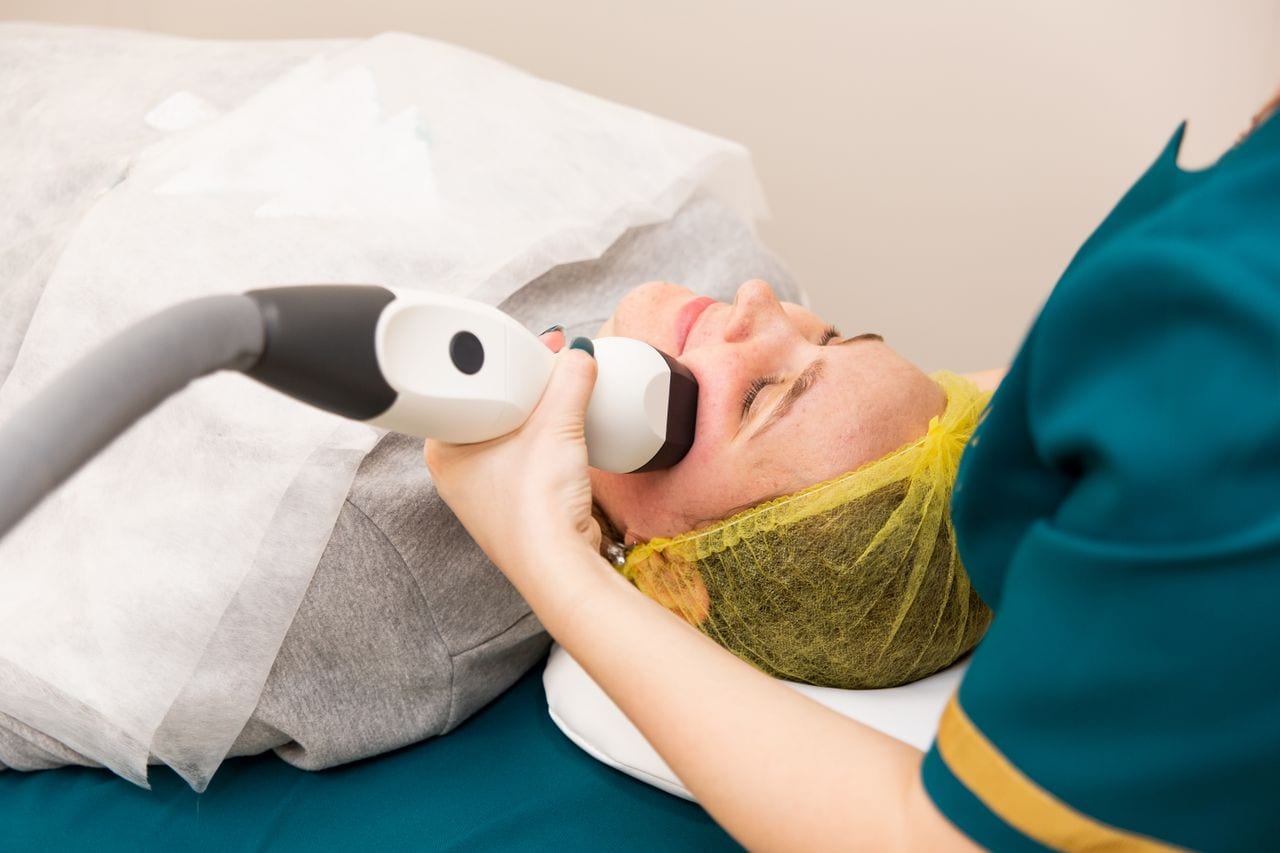
The skin under your eyes is about 0.5 millimeters thick. Thinnest on your body. There's no structural support underneath it, which is why it's usually the first place on your face to show age, fatigue, or volume loss.
When clients hire me as their Plastic Surgery Architect and we get to the under-eyes, the first question is almost always, "Which laser do I need?"
My answer never changes.
Lasers treat skin quality, not anatomy.
Put the wrong technology on the wrong problem and you won't just waste your money. You can do permanent damage. A laser uses focused light and heat to resurface the top layers of skin, break up pigment, and kick-start collagen. It can't add volume where your orbital bone has receded. It can't move a fat pad that's pushing forward.
So before you book anything, you need to know what you're actually looking at in the mirror. These are the six under-eye profiles I see most, and what works for each one.
Find yours.
The Tissue Paper Texture
Last month I sat across from a 54-year-old client. With her face at rest, her under-eyes looked fine. The second she smiled, the skin crinkled into dozens of tiny cross-hatched lines. Her concealer was sitting in the cracks by 10 a.m.
That's tissue paper texture, and it comes from collagen loss deep in the skin. She's a great laser candidate because her problem lives entirely in the skin itself. A fractional ablative laser heats that thin skin in a controlled grid, smooths the fine lines, and pushes her body to rebuild fresh collagen.
Be honest with yourself about the downtime. Around the eyes, expect about a week of looking like you lost a fight.
The Stubborn Shadow
Then there's the 32-year-old with a flat brown band under her eyes. It doesn't change in different light. It doesn't fade after two weeks on a beach.
That's true hyperpigmentation. Her skin is making too much melanin, whether from genetics, years of rubbing her eyes, or sun. Lasers work here. Q-switched and pico lasers hit the pigment with ultra-fast pulses that shatter it into particles small enough for the body to clear away. Plan on a series of gentle sessions.
One big caution. If your skin is medium to deep, the wrong laser or the wrong settings near the eye can leave you darker than when you walked in.
This is the profile where who holds the device matters most.
Ask your provider how many patients with your skin tone they've treated around the eyes, and ask to see the results.
The Translucent Purples
What if the color isn't brown at all, but blue or purple, mostly at the inner corners? Like a bruise that never heals.
That's vascular visibility. The skin is healthy. It's just so thin and pale that you're seeing the veins underneath. A resurfacing laser won't touch it. You need a vascular laser, like pulsed-dye or Nd:YAG depending on the size of the vessels, which goes past the surface and targets the blood itself to shrink those vessels down.
The skin stays thin, so this is maintenance, not a cure. Go in knowing that.
The Hollow Cavern
This is where I save you thousands of dollars.
A 42-year-old runner comes to me with "terrible dark circles." I have her shine a flashlight straight at her face and the darkness disappears. It's not pigment. It's a shadow. Overhead light is falling into a hollow where her mid-face fat has dropped and her bone has naturally receded.
Sell her a laser and she ends up with beautifully smooth, glowing hollows.
A laser can't build bone or fat. She needs volume. Filler is the usual go-to, and it's temporary. Fat grafting can last, but under the eye it's very technique-sensitive, and done badly it leaves lumps you can see. That's exactly why the provider matters as much as the procedure. Polynucleotides won't fill the hollow, but they can thicken and improve the skin sitting over it.
The Morning Pouches
A 58-year-old man tells me he looks exhausted all the time. He has heavy bulges right under his lower lashes.
The first thing I ask: are they there all day? If they're worst when you wake up and settle down by lunch, that's usually fluid, and it's a different conversation. If they're there from morning to night and get bigger when you look up, that's fat prolapse. The fat that cushions your eye is pushing forward because the tissue holding it back has weakened.
His were there all day.
A laser cannot fix a true under-eye bag. Period.
The structural fix is a lower blepharoplasty to reposition or remove the fat. Newer treatments like Endolift or RF microneedling can tighten the skin over the area, but they don't replace surgery when the fat is the problem.
The Filler That Overstayed
A 47-year-old woman came to me convinced she'd developed bags. She was already booked for a laser consult. Puffy under-eyes, a little worse in the morning, and a faint blue-gray cast she couldn't cover.
Then she mentioned, almost as an afterthought, that she'd had under-eye filler. Three years ago. She figured it was long gone.
It wasn't.
Filler under the eye can hang around for years, much longer than most people are told. Over time it can soak up water, puff up, drift out of place, and show through that thin skin with a bluish tint. And it looks so much like aging that people go shopping for the wrong fix. A laser would have done nothing for her. Surgery would have been treating a problem she didn't actually have.
What she needed was for the filler to be dissolved, by someone who does it often and does it carefully. Then a few weeks to let things settle, so we could see what her under-eyes really looked like before deciding anything else.
If you've ever had filler under your eyes, say so at every consultation. Even if it was years ago. Even if you think it's gone.
Most of You Are More Than One
Here's what nobody tells you. Most people don't fit in one box. Thin, crepey skin over a hollow with a little brown on top is incredibly common. Treat one and ignore the others, and you'll be back in a chair in six months wondering why it didn't work.
That's where guessing falls apart.
Stop Guessing
The under-eye is not the place for trial and error.
And the confusion isn't your fault. Nobody connects your anatomy to the right technology before you're in the chair, so you get matched to whatever device happens to be in the room.
That gap is why I built The Regan Method. I help my clients understand what they're actually looking at, then match them with vetted providers who use the right tools for it.
If you want to get educated before you ever sit in a clinic chair, the Laser Room is coming. It's one of 14 private, virtual education rooms inside The Regan House, launching soon. You'll learn how these devices work, who they're for, what they really cost, and the exact questions to ask before anyone touches your face.
Didn't See Yourself?
There are a few more I see all the time. Tell me in the comments if one of these is you.
- Do you have puffy mounds sitting lower, right on your cheekbone, that no cream or treatment seems to touch?
- Do you have tiny skin-colored or white bumps under your eyes that makeup only makes more obvious?
- No bags, no dark circles, but loose skin that folds and creases when you look down?
Tell me which one, and I'll tell you what I'd look at first.
When you're ready to do this right the first time, I'm here.
Conversation (0)
Be the first to join the conversation
Reading and posting comments is reserved for members. Sign in or create an account to unlock full community discussions.