
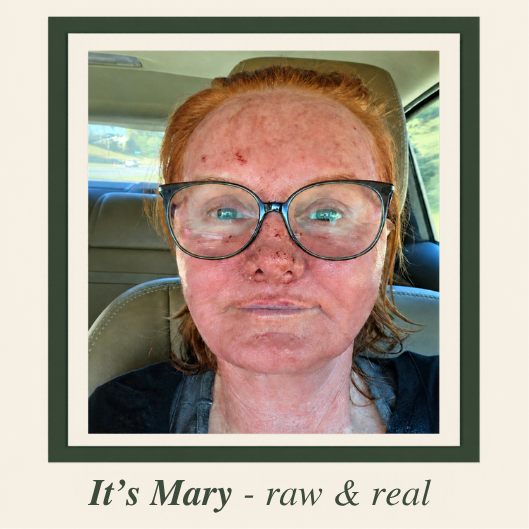
“I had microneedling done before, and it didn't do anything.”
I hear that from clients all the time, and I always give the same answer. “I went to the gym once too, and it didn't do anything.” One session is a big part of the story. It isn't all of it. When I ask what was actually done, the answer is usually one word. “Microneedling.” No depth. No device. No idea whether there was heat involved or what got rubbed into her skin while it was open. Microneedling is a whole family of treatments, and the word on the menu tells you almost nothing. A light pass with a pen at a med spa and a deep heat treatment in a surgeon's office are both called microneedling, and they don't have much else in common.
Here's what actually decides what you get. Your skin has floors Think of your skin like a house with three floors. The top floor is the surface, the part you see and touch. Under that is the dermis, where your collagen lives, and collagen is what keeps skin firm and smooth. Below that is fat, the padding that gives your face its shape.
Microneedling works by making thousands of tiny wounds. Your body rushes in to repair them and builds new collagen while it's there. Which floor those wounds land on decides what changes.
Your question: “How deep are you going, in millimeters, and which layer of my skin does that reach?”
Depth
A shallow pass, around a quarter to half a millimeter, is the light version. You get a glow and smoother texture, and you're pink for a day. Go to around 1.5 to 2.5 millimeters and you're reaching much further into the collagen layer. That's where acne scars and deeper texture actually change. Expect more redness and a few days of recovery. Here's the part nobody tells you. SkinPen, the first FDA-cleared microneedling device, adjusts from 0.25 all the way to 2.5 millimeters. Same pen at both ends. The name of the device doesn't tell you which treatment you got.
Your question: “Is this depth for glow, or deep enough to change my scars? What should I expect to see at this depth?”
A program, not a package
A lot of places sell microneedling as a package of three. Three sessions, one price, done. That isn't how skin works. Your collagen didn't slow down in one season, and it won't rebuild in one either. The first series gets things moving. After that your skin keeps aging, so the work keeps going, with maintenance visits through the year. Plan for it the way you'd plan for the gym, a year at a time. So when you compare prices, compare what the year costs.
Your question: “What does my first year look like, including maintenance after the first series? What's the total cost for the year?”
Needles plus heat
Then there's RF microneedling. RF stands for radiofrequency, and all you need to know is that it means heat. The needles go in and release heat at the tips, and heat is what tightens.
Morpheus8, Potenza, Vivace and Genius are the names you'll see most. Some of these needles are insulated, which means they're coated so the heat only comes out at the very tip. That protects the surface of your skin. Others give off heat along the whole needle and warm more skin on the way down. If you have darker skin, this matters a lot, because heat at the surface is what sets off dark patches.
Your question: “Is this plain microneedling or RF? If it's RF, are the needles insulated?”
When the needles reach the fat
Some RF devices go 4 millimeters deep on the face and even deeper on the body. At that depth you are heating the fat floor. Sometimes that's on purpose, to sharpen a jawline. But fat is part of what makes a face look full and young, and heat can shrink it. The FDA has put out a warning about RF microneedling that lists burns, scarring, fat loss and nerve damage among the reported complications. That's why depth is the question that matters most with RF.
Your question: “Will the heat reach my fat layer, and how are you protecting the padding that gives my face its shape?”
What goes on your skin while it's open
Right after microneedling, your skin is full of tiny open channels. That's when the upsells show up: exosomes, PRP , growth factors, a “special serum.” I want to be fair here, because this is a gray area. Dermatologists at Mayo Clinic and Harvard see real promise in exosomes. They also say the science isn't finished. How exosomes are made still isn't standardized, and the large clinical trials haven't been done. Here's what isn't gray. This comes straight from the FDA: There are no FDA-approved exosome products. The FDA put out a public safety notice in 2019 after patients in Nebraska had serious reactions to unapproved products sold as containing exosomes, and it has kept sending warning letters to exosome sellers ever since, including this year. Microneedling devices are not approved to deliver cosmetics, creams, vitamin solutions, drugs or blood products like PRP into your skin. The FDA has not cleared any microneedling device for use with another product. That means the FDA hasn't reviewed whether the combination is safe or whether it works.
None of that means every add-on is bad. It means that when you're paying extra for one, you deserve a straight answer about what it is. The FDA's own advice to patients is a good place to start: ask if the FDA has reviewed the treatment.
Your question: “What exactly are you putting on my skin while it's open? Where does it come from, and has the FDA reviewed it? What will it add to my result, and what does it cost?”
If you have darker skin
Plain microneedling, with no heat, is usually one of the gentler options for darker skin. RF is where you need to be more careful: insulated needles and a provider who plans conservative settings for your skin.
Your question: “How many patients with my skin tone have you treated with this device? Can I see their before and after photos?”
So why didn't the microneedling work?
Here's what I see when I dig into a disappointing round of microneedling. She got the glow treatment and expected the scar treatment. A shallow pass is lovely. It isn't going to move an acne scar, and nobody told her the depth. Your question: “If I want my scars to change, how deep do we need to go, and is that what you're doing today?” She bought a package instead of a program. This is the gym again. Three sessions got her started, and then she stopped. Her skin didn't.
Your question: “What happens after the first series, and how often will I need maintenance?”
She judged it too soon. Collagen is slow. What you see in the first week is mostly swelling and fresh skin settling down. The real change shows up over months.
Your question: “When should I expect to see my real result?”
It was asked to fix something it can't fix. Microneedling works on skin. It can smooth texture and soften scars, and with RF it can tighten a little. It cannot lift a cheek that has fallen. If the problem is the foundation, needles at the surface won't fix it. Your question: “Is what I'm seeing a skin problem or a structure problem? Be honest with me." The add-on got the credit or the blame. She paid extra for exosomes or a serum and couldn't tell whether it did anything, because nobody told her what it was supposed to do.
Your question: “What will this add-on change that the microneedling alone won't?”
It went too deep, with too much heat. This is the one that turns “it didn't work” into “it made things worse.” Too much heat in the fat layer can take away some of the padding that gives a face its shape.
Your question: “What depth and heat are you using on my face, and why is that safe for my face specifically?”
Nobody checked whether she was a good candidate that day. My own niece was never told she wasn't a good candidate because of an active breakout. Needling through an active breakout or a skin infection can spread it and leave you worse off than when you walked in. A good provider looks at your skin that day and tells you if you need to wait.
Your question: “Is there anything about my skin or health right now that makes this a bad idea today?”
Nobody asked who was holding the device. The FDA itself recommends going to a provider with special training in microneedling, because these needles can reach nerves and blood vessels.
Your question: “Who will actually be doing my treatment, and how many have they done on skin like mine?”
Start with how deep
So don't walk in asking for microneedling. Ask how deep, and whether there's heat. That answer tells you which floor of your skin is about to change.
If nobody in the room can tell you that in plain words, you've found the gap. Depth is identity.
The Reality Check: Answering the Critics
Critic Trap 1: “Microneedling is one of the safest treatments out there. You're scaring people.”
The Fact: Plain microneedling done well is one of the gentler treatments on the menu, and I say so in this piece. What I'm warning about is the word. When “microneedling” can mean a light pass or 4 millimeters of heat in your fat layer, women deserve to know which one they're signing up for.
Critic Trap 2: “You're not a doctor.”
The Fact: I'm not choosing your treatment. Your provider does that. I'm making sure you understand the conversation when they do. Every question here is one a good provider will be glad to answer.
Critic Trap 3: “Exosomes speed up healing. You're behind the times.”
The Fact: Maybe someday the research will prove that. Today, the FDA says there are no FDA-approved exosome products, and it has never cleared a microneedling device for use with any other product. A 2025 review by dermatologists from Mayo Clinic and Harvard called exosomes promising, and in the same breath said they still need standardization and real clinical trials. I'm not saying never. I'm saying ask where it came from and whether the FDA has reviewed it.
Critic Trap 4: “Morpheus8 is safe in the right hands.”
The Fact: Agreed. That's why “who is holding the device” is on your list. The right hands also choose the right depth for your face, and that's the question I want you asking.
Critic Trap 5: “Is some company paying you?”
The Fact: No. I am never paid by any company, and I don't have an agenda. You pay me one time for my best advice, and after that the decision is yours. Whether you choose the treatment I'd pick for you, something different, or nothing at all, I don't receive a thing from you or from the provider. Last week my client Lisa G. came to me after a doctor recommended Ellacor. I didn't think it was the right choice for her, and I told her so. Then I sent her to my Ellacor blog and the comment Dr. Montague left at the end of it, and I told her the decision was hers. I had nothing to gain either way. She read it and came back with, “I'm listening to you.”
Everyone else in that consult room gets paid when you say yes. I don't. I've been saying it for years: I am the only one in this industry who wants more for you and less from you.
Critic Trap 6: “An annual program? You're just helping med spas sell more sessions.”
The Fact: I don't get a dime from any of those sessions. A three-pack sold as the whole answer is what sets a woman up to say “it didn't do anything.” Telling her up front what a real year looks like lets her decide whether it's worth it before she spends the first dollar. If the year doesn't fit her budget, she should know that now, not after session three.
One more thing. Brands come and go, and plenty of devices offer more than one needle tip and depth. The name on the device still doesn't tell you enough. Ask, “How deep, and is there heat?”
Bring these to your consult
- How deep are you going, in millimeters, and which layer of my skin does that reach?
- Is this depth for glow, or deep enough to change my scars?
- Is this plain microneedling or RF? If it's RF, are the needles insulated?
- Will the heat reach my fat layer, and how are you protecting the padding that gives my face its shape?
- What are you putting on my skin while it's open, where does it come from, has the FDA reviewed it, and what does it cost?
- What will that add-on change that the microneedling alone won't?
- What does my first year look like, including maintenance, and what's the total cost for the year?
- When should I expect to see my real result?
- Is what I'm seeing a skin problem or a structure problem?
- Is there anything about my skin or health right now that makes this a bad idea today?
- Who will actually be doing my treatment, and how many have they done on skin like mine?
- How many patients with my skin tone have you treated with this device? Can I see their photos?
- You don't need to ask every one of these. Pick the ones that matter most for your face and your goal, and bring those. A good provider will usually answer the rest before you even get to them.
The Regan Method
The Regan Method, The Regan Surgical Collective, and The Regan House are about bringing truth to an industry that doesn't currently want it to exist. But we are changing that, one real conversation at a time.
Ready to go deeper? Your journey begins the moment you decide you don't want to navigate it alone.
Conversation (0)
Be the first to join the conversation
Reading and posting comments is reserved for members. Sign in or create an account to unlock full community discussions.